
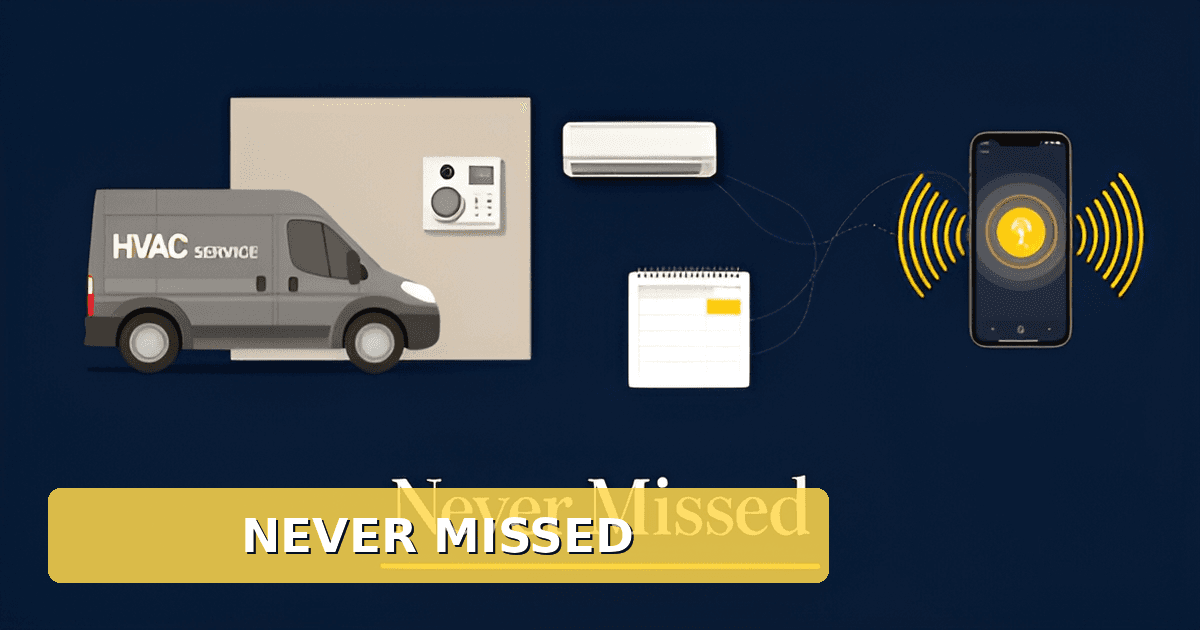
AI Answering Service for HVAC Companies: How It Works
Key Facts
- 27% of home services calls go unanswered, and fewer than 3% of voicemail callers ever leave a message, per Invoca 2024 research.
- Companies that contact a lead within an hour are 7x more likely to qualify it, with odds falling sharply after five minutes, per Harvard Business Review.
- AI answering services pick up in under two seconds and handle unlimited simultaneous calls, while shared human services buckle during heat wave surges, per vendor documentation.
- Most HVAC shops go live with an AI receptionist in about 15 minutes, trained on their website and documents, with no IT staff required, according to Marlie.ai.
- 62% of buyers call a business before purchasing, so your phone line and Google Business Profile must work as one lead path, per Invoca research.
- An 8-year HVAC veteran reports his AI receptionist books appointments and 'most customers don't even realize it's not a person,' per a firsthand Reddit account.
- The Bureau of Labor Statistics projects 11% job growth for HVAC mechanics and installers through 2035, meaning every tech hired is needed in the field, not on the phone.
Every Missed Call Is a Job Your Competitor Just Won
The economics of a missed call in the trades are stark: Invoca 2024 research puts the unanswered-call rate for home services at 27%, and fewer than 3% of callers pushed to voicemail ever leave a message. That means for every ten calls an HVAC company receives, nearly three slip through without a conversation. Practitioners on r/HVAC confirm the fallout, customers “don’t wait, they just call the next tech on the list.” Owners have tried the alternatives: call forwarding to a family member “didn’t last long,” and a part-time human answering service was “inconsistent and expensive.” When the phone goes unanswered, the job goes to the competitor.
Emergency dispatches rarely happen on a schedule that aligns with a nine-to-five office. Heat waves and cold snaps trigger call spikes that overwhelm traditional services; Marlie.ai notes that shared human answering services “buckle” during market-wide volume surges, while AI handles unlimited simultaneous calls with no busy signals. The core call flow is becoming standard across vendors: the AI answers on the first ring, greets with the company name, and asks two or three short triage questions, what’s happening, whether anyone is unsafe, and if heating or cooling is working now. No-heat, gas-smell, and water-from-an-air-handler calls are flagged as emergencies and dispatched via call or text to the on-call technician, while routine requests like tune-ups and filter questions are booked into real-time slots and pushed to the field service management system with a transcript attached. This structure means no caller hears a busy signal, and no emergency sits in a queue until morning.
Seasonal overflow is where the technology pays for itself. Call volume spikes predictably during extreme weather, and per-call or per-minute pricing models can make those spikes expensive versus flat-rate unlimited plans. Allo’s founder calls call transfers to on-call techs “a dealbreaker for most contractors,” noting that dynamic weekly rotation routing updated via dashboard prevents the wrong-tech routing that plagues shared human services. Setup is content-based: the AI is trained on the company’s website or uploaded documents covering services, pricing, and service areas. Most shops go live in under 15 minutes with no IT staff required. Bilingual capability is also a practical consideration, Dapta.ai notes that in most U.S. markets a real share of inbound calls are in Spanish, and an HVAC receptionist that only speaks English is turning away paying customers.
The labor shortage context reinforces the pressure. The U.S. Bureau of Labor Statistics projects 11% job growth for HVAC mechanics and installers through 2035, and the report notes every tech hired is needed in the field, not on the phone. Owners worried about older client demographics can take comfort in practitioner reports that “most customers don’t even realize it’s not a person,” though the concern remains valid for some service areas. A key guardrail: AI should quote diagnostic fees but never repair pricing, keeping the company protected from commitments made before a technician sees the job. The result is a call flow that answers 24/7, triages emergencies instantly, and books routine work without a human ever touching the phone, turning missed calls into booked jobs, and booked jobs into revenue that stays in the field.
How an AI Answering Service Handles an HVAC Call, Step by Step
When a customer calls at 11 p.m. with a furnace that just quit, the next ninety seconds decide whether you get the job. Here's the call flow you can expect from a well-built system, and it's remarkably consistent across the market.
Step 1: The answer. The AI picks up on the first ring, 24/7, and greets the caller with your company name. Some services answer in under two seconds, according to one vendor's product documentation. That speed matters: Invoca research found fewer than 3% of callers pushed to voicemail leave a message, and 27% of home services calls go unanswered entirely.
Step 2: Triage. The AI asks two or three quick sorting questions: Is anyone unsafe? Is the heat or cooling currently working? What's the service address and a callback number? It collects equipment type and issue description along the way. As one industry analysis puts it, a good HVAC receptionist has to think like a dispatcher, not a chatbot.
Step 3: Emergency routing. Keywords like "no heat," "no AC," or "gas smell" trigger emergency dispatch. The AI calls or texts the on-call technician directly, using a rotation you can update weekly. Real dispatch means the tech gets contacted live, not an emailed transcript to read the next morning. One founder calls live transfers to on-call techs "a dealbreaker for most contractors."
Step 4: Non-emergency booking. Routine calls, quotes, tune-ups, filter questions, get booked into your live schedule and synced to your field service management software:
- ServiceTitan, for call answering, routing, and appointment setting
- Housecall Pro and Jobber, synced without human retyping
- CRM tools like HubSpot, Pipedrive, and Salesforce where needed
A transcript attaches to every booking, so the tech knows what's waiting before rolling out. A Michigan contractor on r/HVAC described exactly this setup for after-hours calls, with next-morning appointment review, and reported it's worked out.
The pricing guardrail. A properly configured AI receptionist quotes diagnostic fees, for example, $99 standard hours, $189 after hours, $240 on holidays, but never repair pricing. That keeps you protected from commitments no one can make before seeing the job. If a system offers to quote a compressor replacement over the phone, that's a red flag.
This is the flow we build around at Agents by AIQ when we set up an AI receptionist for a contractor: emergency keywords tuned to your dispatch preferences, on-call routing that matches how your team actually works, and bookings landing in your scheduling software without anyone retyping anything. Book a free demo to hear how an AI answering service handles real HVAC calls, from emergency dispatch to after-hours bookings.
Emergency Dispatch, After-Hours Calls, and Seasonal Overflow
When a furnace dies at 2 a.m. in January, the homeowner isn't leaving a voicemail. Fewer than 3% of callers pushed to voicemail leave a message, and research on home services call data shows 27% of inbound calls go unanswered entirely. For HVAC companies, those missed calls are emergency jobs walking straight to the next contractor on the list.
The difference between a useful AI answering service for HVAC and a glorified voicemail comes down to one thing: what happens after the AI hangs up. Real dispatch means the system texts or calls the technician on rotation immediately, capturing the address, callback number, and issue description while the caller is still on the line. An emailed transcript waiting for morning review helps nobody when the customer's pipes are freezing.
A well-built emergency HVAC call dispatch flow looks like this:
- AI answers on the first ring, greets with your company name, and asks 2–3 triage questions: is anyone unsafe, is there heat or cooling now, what's the address.
- Emergency keywords like "no heat," "gas smell," or water from an air handler trigger immediate escalation via SMS or live transfer to the on-call tech.
- Non-emergencies get booked into real time slots in your scheduling software, with a transcript attached so nothing gets retyped.
Rotation matters as much as routing. Vendor documentation on dynamic on-call routing describes weekly rotation schedules updated through a dashboard, so the AI always reaches the tech actually on rotation. Static on-call lists, common in shared human answering services, cause wrong-tech dispatches at 11 p.m. Allo's founder has called live transfers to on-call techs a dealbreaker for most contractors.
A Michigan home services company couldn't staff 24/7 phone coverage after employees quit during the lockdown, and tested an AI tool that answers, routes, and sets next-morning appointments. Their verdict after running it: it's worked out. That's the realistic promise of HVAC answering service after hours coverage. An 8-year HVAC veteran on Reddit reports his AI receptionist books appointments and "most customers don't even realize it's not a person."
Heat waves don't just spike your call volume, they spike the entire market's. Shared human answering services buckle during market-wide surges because their agents are handling calls for dozens of clients simultaneously. AI has no such ceiling: it handles unlimited concurrent calls with no busy signals, which is the core advantage of HVAC call overflow automation.
Pricing structure matters here too. Per-call and per-minute plans get expensive precisely when call volume spikes in July, while flat-rate unlimited plans keep the bill stable through the season. One comparison notes usage-based pricing as a key cost risk during heat waves versus flat-rate alternatives.
At Agents by AIQ, we build done-for-you AI receptionists with exactly this dispatch logic configured for your rotation and scheduling tools. Book a free demo to hear how an AI answering service handles real HVAC calls, from emergency dispatch to after-hours bookings.
What Setup Actually Looks Like (and the Objection Worth Taking Seriously)
One of the quiet selling points of a modern AI answering service for HVAC companies is how little setup it actually requires. There's no scripting marathon, no weeks of configuration, no IT project. The system learns from what your business already has on paper.
Training is content-based. You point the AI at your website or upload documents covering your services, pricing, and service areas, and it builds its answers from that material, according to a vendor comparison of AI phone answering tools. In practice, that means the AI can learn your price list, the towns you cover, and the questions customers ask most, from the same information you'd hand any new office hire, as one software guide describes it.
How fast can you go live? Vendors report impressive numbers. Marlie.ai describes a four-step setup (account creation, number forwarding, customizing emergency keywords and fee scripts, then integration with your field service software) and claims most shops are live in about 15 minutes with no IT staff involved. Treat those figures as vendor claims rather than guarantees. Even if setup takes an afternoon instead of 15 minutes, the point stands: this is a configuration task, not a construction project.
The objection worth taking seriously is the demographic one. An Oregon HVAC owner on Reddit hesitated precisely because "most of our client base is 55-75 age range," worrying that older customers won't want to deal with an AI on the phone. That concern isn't unreasonable, and it deserves an honest answer rather than a dismissal.
Here's the counterpoint, from the field. An eight-year HVAC veteran using an AI receptionist reports that it answers in a natural voice, handles basic questions, and books appointments, and that "most customers don't even realize it's not a person." Both accounts can be true at once. Customer acceptance likely depends on how the system is implemented and on your specific caller mix. If a large share of your callers are older homeowners, the practical move is to test it: listen to real call recordings, watch whether bookings complete, and keep a human transfer option for anyone who asks.
Two practical factors round out the setup picture. First, language: in most US markets a real share of inbound calls come in Spanish, and an answering service that only speaks English is effectively turning away paying customers, so bilingual capability is a selection criterion, not a nice-to-have. Second, guardrails: a well-configured AI quotes your diagnostic fees (say, $99 standard hours versus $189 after hours) but never quotes repair pricing it can't stand behind before seeing the job.
At Agents by AIQ, we handle this configuration for you as part of a done-for-you agent build, including the call flows and fee scripts. If you want to hear how it sounds before committing anything, book a free demo and hear a real HVAC call handled end to end, from emergency triage to after-hours booking.
Where This Fits: Your Phone Line, Your Google Business Profile, Your Next Call
Your phone line is your storefront, and right now it's leaking revenue. Before you bring in an AI answering service for HVAC work, you need to know exactly where that leak is and what you want the AI to do about it.
Start with a missed call rate audit. Pull your phone logs for the last 90 days and count the calls that hit voicemail or rang out during jobs, lunch, and after hours. Research cited by Invoca 2024 puts the industry baseline at 27% of home services calls going unanswered, and fewer than 3% of callers pushed to voicemail leave a message. If your numbers land near that, you're not losing a few calls. You're losing customers who, as one r/HVAC technician put it, "don't wait, they just call the next tech on the list."
Next, decide what counts as an emergency in your shop. A no-heat call in January with a baby in the house? Emergency. A gas smell? Emergency, full stop. A rattling blower on a Tuesday afternoon? Probably a booking. Write your definitions down, because your AI receptionist will triage against exactly what you give it. Vendors in this space converge on the same pattern: 2–3 sorting questions (is anyone unsafe, is there heat or cooling now, what's the address), then emergency dispatch to the on-call tech and routine booking into the live schedule, per call-flow documentation.
Then map your call flow and pick integration points:
- Phone line: forward your existing number (or just after-hours and overflow) to the AI, so every call answers on the first ring.
- Field service software: sync bookings straight into ServiceTitan, Housecall Pro, or Jobber with a transcript attached, no retyping.
- Google Business Profile: your listing drives calls, and 62% of buyers call before purchasing, so the listing and the phone line have to work as one lead path.
- On-call rotation: a dynamic weekly schedule the AI routes emergencies against, rather than a static list that sends the 2 a.m. no-heat call to the wrong tech.
Remember why this matters: the phone is where leads actually arrive, and speed decides who wins them. Harvard Business Review research, as cited in the industry literature, found companies that contact a lead within an hour are 7x more likely to qualify it, with odds falling off sharply after five minutes. As QuoteIQ co-founder Mike Vidan puts it, contractors lose jobs "not because they were more expensive or less qualified, but because they called back the next morning instead of that afternoon."
The good news is you don't have to build any of this yourself. Agents by AIQ designs, connects, and runs done-for-you AI receptionists on a real phone number, integrated with the tools you already use, month to month. Book a free demo to hear how an AI answering service handles real HVAC calls, from emergency dispatch to after-hours bookings.
Frequently Asked Questions
How does an AI answering service for HVAC companies actually handle a call?
How many calls do HVAC companies actually miss without one?
Will older customers refuse to talk to an AI receptionist?
Can an AI answering service handle emergency dispatch at 2 a.m.?
What happens to pricing when call volume spikes during a heat wave?
How long does setup take, and will the AI quote repair prices to customers?
The Next Call You Don't Miss Is the Job You Just Won
The mechanics of an AI answering service for HVAC companies are simpler than the stakes suggest: answer on the first ring, ask two or three triage questions, dispatch emergencies to the tech on rotation, and book everything else straight into your scheduling software. What makes it worth acting on is the math, 27% of home services calls go unanswered, and fewer than 3% of callers pushed to voicemail ever leave a message, per Invoca 2024 research. Your next step costs nothing: pull 90 days of phone logs and count your own missed-call rate, then define what counts as an emergency in your shop. If the leak is real, hear it fixed. At Agents by AIQ, we build and run done-for-you AI receptionists configured to your dispatch preferences and scheduling tools, month to month. Book a free demo to hear how an AI answering service handles real HVAC calls, from emergency dispatch to after-hours bookings.