
If you run a small business, you've probably noticed the language around AI shifting over the past couple of years. Two years ago the pitch was chatbots. Now it's agents. The words sound similar, and a lot of vendors use them interchangeably, but the difference matters when you're deciding whether to spend money on one. A chatbot responds. An agent acts. That distinction is showing up everywhere in the market right now, from analyst forecasts to vendor announcements, and it's worth cutting through the noise to understand what's actually changed and what it means for a business with ten employees and a phone that rings off the hook. One caveat before we go further: a fair amount of what you read about AI agents comes from press releases paid for by the companies selling them. We'll flag where the claims are solid and where you should squint.
Key points
- Autonomous agents differ from chatbots by planning multi-step work, using your software tools, and checking their own results
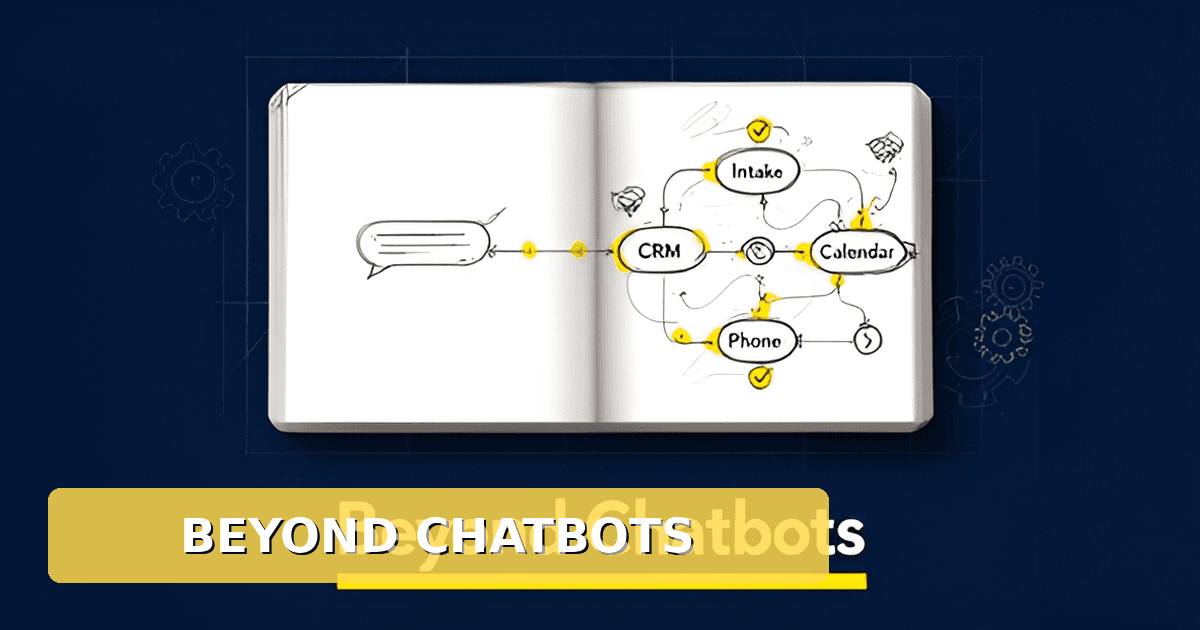
- The practical shift is from single tasks (answer a question) to connected workflows (intake, CRM update, scheduling, follow-up)
- Specialized agents with distinct jobs tend to outperform one do-everything bot
- Integration with your existing CRM, calendar, and phone systems is the real test of whether an agent is worth anything
- Human oversight still matters: decide up front which decisions the agent makes alone and which need your approval
The older generation of tools worked like this: a customer typed a question, the software matched it against a script or knowledge base, and it replied. Useful for FAQs, useless for anything that required action. An agent works differently. It takes an objective, breaks it into steps, uses actual software tools to complete them, and then checks its own work. Ask it to handle a new inbound lead and it might look up the caller, log the inquiry in your CRM, check the calendar, offer available appointment times, send a confirmation, and set a follow-up reminder. No human touched any of it. That's the real shift. It's not that the AI got smarter at conversation. It's that these systems can now operate the software your business already runs on, which turns a conversation into a completed workflow.
Here's where it gets practical for an owner-operator. The single most common mistake we see is buying AI to automate one task in isolation. A missed call gets answered, but the details never reach your CRM. A lead form gets filled out, but nobody follows up for three days. Each tool works; the process still leaks. The current generation of agents is built around connected workflows instead. Intake flows into categorization, which flows into a CRM update, which triggers scheduling, which sets up follow-up, which produces a report. When the pieces talk to each other, the busywork that used to fall between the cracks gets handled. For a small team, this is the capacity argument. You're not hiring a second receptionist and a part-time admin. You're extending the hours and coverage of the people you already have. That doesn't mean the results are guaranteed, and anyone promising you a specific number of recovered leads is selling you something. But the structural advantage is real: agents scale coverage without scaling headcount.
Another pattern that's emerged: instead of one general-purpose assistant, businesses are running several narrow agents, each with a defined job and its own permissions. A receptionist agent answers the phone and books appointments. A follow-up agent works your stale leads. A support agent handles incoming questions after hours. A marketing agent drafts and schedules. Each one is simpler to build, easier to test, and safer to correct than a single system trying to do all of it. There's an engineering reason this works better. A narrow agent has a short job description, so it makes fewer judgment calls you didn't anticipate. When something goes wrong, you know exactly which agent to adjust. With a monolithic bot, a single bad behavior can surface anywhere. If you're evaluating vendors, ask how they scope the work. A serious builder will sketch the specific agents your business needs, not hand you a generic assistant and wish you luck.
This is the point we'd underline hardest, and it's one even vendor material gets right: an agent that can't securely connect to the tools you already use has limited practical value. Think about what an agent actually does. It books into your calendar. It writes to your CRM. It sends email from your domain. If it can't do those things, it's a chat window, and your team ends up doing the same copy-paste work they did before, just with an extra step in the middle. So when you evaluate an agent provider, the integration questions come first. Does it work with your CRM, your phone system, your scheduling setup, your email? Does it write back reliably, or only read? Who owns the accounts and the data? If the answer to that last one is the vendor, walk away. Month-to-month arrangements where you own everything are the norm for a reason: you shouldn't have to rebuild your operation from scratch to change providers.
The marketing copy would have you believe agents now run entire businesses unsupervised. The honest version is more measured, and more useful. Some decisions are fine to delegate completely. Answering a routine call, quoting your standard hours, booking an open slot, sending a confirmation. These are repeatable, low-stakes, and time-sensitive, which is exactly where agents shine. Other decisions should stay with a person. Pricing exceptions. An angry customer asking for a refund. Anything legal or medical that requires judgment and accountability. The best agent deployments draw this line explicitly: the agent handles what it handles, and anything outside that boundary gets escalated to you with the context attached. When you scope an agent build, insist on having this conversation. A vendor who can't tell you where their system stops and your judgment begins hasn't thought the design through.
One thing worth knowing as you read coverage of this trend: a surprising share of it traces back to syndicated press releases. The same vendor-written text, word for word, appearing in a dozen regional outlets reads like industry news but is really paid distribution. Market forecasts in this space vary wildly depending on who commissioned them. None of this means the underlying trend is fake. Agents running real workflows for real businesses is happening now, and the direction of travel is clear. It just means you should weigh claims accordingly. Ignore the projections and the superlatives. Ask instead for a concrete description of what the agent will do in your business, which tools it will touch, and where the human handoffs happen. Vendors who can answer that specifically are worth a call. Vendors who answer with growth charts are not.
The shift from chatbots to agents is real, and for small businesses it's arguably more consequential than for large enterprises, because a ten-person company feels every recovered lead and every answered after-hours call. The technology matters less than the design: narrow agents with clear jobs, tight integration with the software you already run, and explicit boundaries on what stays human. Ask those three questions of any provider, including us, and you'll cut through most of the noise in this market.