
If you run a small business, you already know the uncomfortable arithmetic of inbound leads. Someone messages you at 9:40 on a Tuesday night, you see it Wednesday morning, and by then they've booked with whoever answered first. SalesCloser Technologies Ltd., a Vancouver-based conversational AI company listed on the TSX Venture Exchange, is betting that a meaningful share of those messages now arrive on WhatsApp. On October 27, 2026, the company announced that WhatsApp is a native channel for its AI sales agents, meaning a lead who messages a business on WhatsApp gets a reply in seconds, at any hour, drawn from that business's own services, pricing, and operating hours. The announcement arrived as a single press release through GlobeNewswire, with same-day pickup by the Financial Post, the Manila Times, and MENA FN. There's no independent reporting in the set, no named customers, and no pricing. That matters for how much weight to put on the news itself. What's more useful is what the release reveals about how the category is maturing, and which design decisions are worth copying regardless of which vendor you choose.
Key points
- SalesCloser Technologies Ltd. announced on October 27, 2026 that WhatsApp is now a native channel for its AI sales agents, activated per customer on request.
- The agent replies in seconds using the business's own services, pricing, and hours, and escalates to a human with a reason and a direct link when asked.
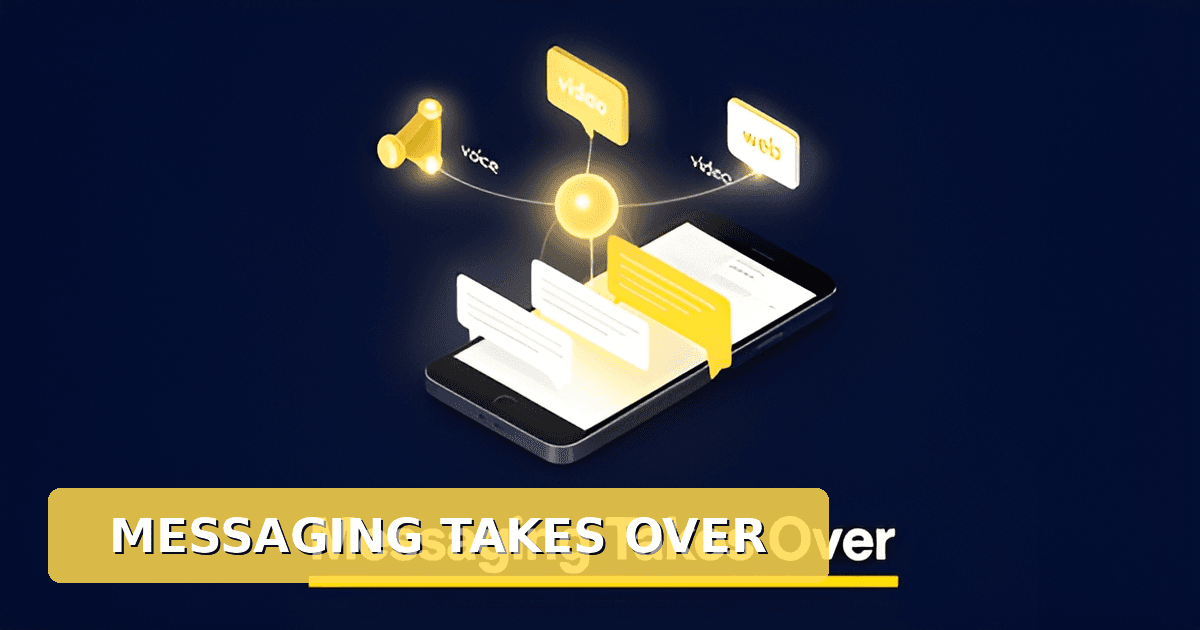
- WhatsApp runs on the same agent and knowledge base as the company's voice, video, and web channels, a pattern of one agent across many channels.
- The announcement was distributed as a single GlobeNewswire release picked up by several outlets; no independent reporting, customer data, or pricing was included.
- For small and mid-size businesses, the takeaway is about design choices: business-owned knowledge, human-in-the-loop handoff, and opt-in channel activation.
The core capability is straightforward. When a lead messages a business on WhatsApp, the SalesCloser agent responds within seconds, using the business's own services, pricing, and hours. WhatsApp is live in the platform but turned on per customer at that customer's request, which is a deliberate commercial choice. Messaging channels carry setup, consent, and compliance considerations that a vendor shouldn't impose unilaterally, and SalesCloser has chosen to let each customer decide when to switch it on. The more interesting part is the handoff. If a lead asks for a human, the agent tells them the team has been notified, then pauses itself. It emails the business immediately with the reason for the handoff and a direct link to the conversation. Staff reply from a new "Chats" tab in the dashboard, and the reply reaches the lead on WhatsApp. While a person is in the thread, the agent stays silent. One click returns the conversation to the agent, which picks up where it left off. If no human replies in time, the agent takes the conversation back and tells the lead the team will follow up. The release doesn't specify how long "in time" is, and that's a detail worth asking about if you're evaluating any vendor in this space. A handoff timeout that's too short creates a confusing experience for the lead. Too long, and you've lost the trust you were trying to build. SalesCloser describes WhatsApp as running on the same agent and knowledge base as its existing voice, video, and digital channels. CEO Ali Tajskandar framed it as "one agent, one knowledge base" with consistent human-in-the-loop controls. That architecture claim is the part of the announcement that matters most beyond the WhatsApp headline.
A lot of AI sales tools are marketed on the promise that the AI handles everything. That's not what this release emphasizes. It goes out of its way to describe what happens when the AI reaches its limit. The agent doesn't improvise. It states that the team has been notified, stops, and escalates with a reason and a link. That's the right instinct, and it's the pattern most small-business buyers should care about. A wrong answer from an AI on a price or an availability question isn't a minor glitch. It's a trust problem and, depending on your industry, a liability problem. A customer who's told a service costs one number and then invoiced another number doesn't blame the AI. They blame you. The handoff mechanics here are also more thoughtful than the usual "press 0 to speak to a person." The agent pauses itself, which prevents it from talking over a human. It emails with a reason, which gives your staff context before they open the thread. And it resumes on its own if nobody responds, so the lead isn't left hanging in silence. None of that is exotic technology. It's just careful product design, and it's the part of this announcement that's easiest to learn from.
A year or two ago, the question vendors answered was whether their AI could handle a phone call. Now the question is whether it can handle every channel a lead might use. SalesCloser's existing set covered voice, video, and website conversations. WhatsApp is the fourth channel, and it's arguably the most consequential for certain markets. The release cites more than three billion WhatsApp users across over 180 countries, more than 100 million monthly users in the United States, and WhatsApp as the most used social network in Latin America as of the second quarter of 2025. Those figures come from the company and no underlying source is cited, so treat them as directional. The distribution footprint of the release itself tells a similar story. It was picked up by a Philippine daily and a Gulf-region business outlet, which lines up with markets where WhatsApp is the default way people message a business. For a small business in Canada or the US, WhatsApp may not be your primary channel today. But the broader point holds. Your leads are already spread across phone, web chat, text, email, and social messaging. An agent that only handles one of those channels leaves gaps, and the gaps are where leads go cold.
The release is a product announcement, not a case study. There are no named customers, no adoption numbers, no usage data, and no pricing. There's no detail on WhatsApp Business API configuration, template messages, or messaging-window compliance, which are the practical details that determine whether a WhatsApp integration actually works in production. There's also no disclosed handoff timeout, as mentioned above. That's not unusual for a press release, and it's not a knock on SalesCloser specifically. But it does mean you shouldn't read the announcement as proof that the integration works well in the field. It's proof that the capability exists and that the company has thought through the handoff flow. If you're evaluating any vendor in this category, ask for a demo with your own pricing and hours loaded in, and ask what happens when a lead asks a question the knowledge base can't answer. The answer to that second question tells you more about the product than any feature list.
SalesCloser operates on a subscription SaaS model. You pay a recurring fee, you get access to the platform, and you configure it to your business. That model works well for businesses with someone on staff who can own the setup and the ongoing tuning. There's a different model, and it's the one we work in at Agents by AIQ. We design, build, and run the agent for you, on a month-to-month basis, and you own everything. The trade-off is straightforward. A subscription platform gives you a lower entry price and more control over configuration. A done-for-you build gives you less setup work and a team that's accountable for how the agent performs. Neither is universally better. It depends on whether you have the time and the appetite to run the tool yourself. What both models share, at their best, is the design pattern SalesCloser is describing here. Business-owned knowledge. Human-in-the-loop handoff. One agent across multiple channels. Those aren't vendor-specific features. They're the things that separate an AI agent that helps your business from one that creates new problems.
SalesCloser's WhatsApp launch is a useful marker of where lead-response automation is heading. The channel matters, but the handoff design matters more. If you're shopping for an AI agent, ask about the escalation flow before you ask about the feature list. Ask what the agent does when it doesn't know the answer, how quickly a human gets notified, and who owns the knowledge base. Those questions will tell you more about whether the tool will help your business than any announcement will.