
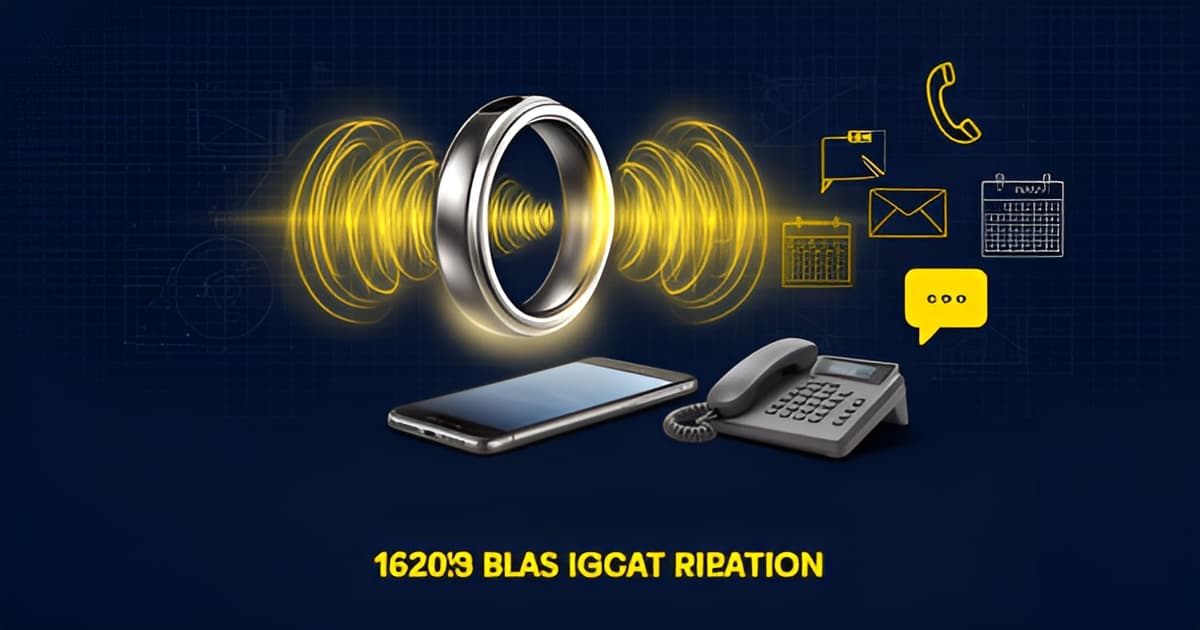
On November 5, 2026, Aina publicly unveiled an AI-powered smart ring with a display, positioning the device as a new hardware interface for the age of proactive AI agents. The ring learns user patterns from connected phones, Macs, and AI agents, then surfaces suggestions, called 'Cues', just before they are needed. Users flick up or down to approve or reject, or hold a center button to speak with agents by voice. The launch is significant not just for the hardware itself, but because it signals that agent-based interaction is moving from a niche capability to something approaching consumer expectation. For small and mid-size businesses, this shift changes the calculus: the days of treating AI agents as optional tools are giving way to an environment where customers will increasingly expect agents, not just apps.
Key points
- Aina's AI ring demonstrates that agent interfaces are entering the mainstream, validating the market need for business-grade AI agents.
- The ring's voice-first design mirrors the AI receptionist and voice-agent capabilities small businesses are already adopting to answer calls and follow up leads.
- Proactive 'Cues' technology shows where business agents are headed: anticipating needs rather than waiting for triggers.
- Small businesses losing missed calls and slow lead follow-up should consider AI agents as the operational layer that surfaces before the customer leaves.
- Hardware-announced-before-shipping categories have struggled historically, but the software agent layer delivers durable value regardless of which device surfaces it.
Aina was founded in May 2025 by Apoorv Shankar, formerly vice president of hardware at Ultrahuman. The company spent roughly 15 months in stealth mode, backed by venture capital, before unveiling its first product on November 5, 2026. The ring itself runs what the company calls a "Context Aware Operating System" that learns patterns by pulling context from the user's phone, Mac, and connected AI agents. It then predicts the next three things the user needs. Suggestions appear on the ring's display as "Cues," and users can flick up or down to approve or reject, or hold a center button to speak with agents by voice. The built-in speaker supports calls and agent conversations; users can initiate a call by voice and raise their hand to their ear. Three usage modes are available. Voice mode lets the user talk to agents, take notes, and handle calls. Cues mode delivers proactive suggestions based on learned patterns, location, and calendar. Remote mode acts as a contextual controller for music, meetings, TV, and other connected devices. The company's thesis is that phones are too cumbersome for the many small approval decisions proactive agents will generate daily. Touchscreens and keyboards were designed for a pre-AI era; frequent yes/no decisions do not justify unlocking a phone each time. Shankar frames Aina in a lineage of computing shifts: mouse + GUI for personal computing, touchscreen + App Store for mobile, and now ring + agents for what the company calls "personalized computing." The founder's hardware pedigree at Ultrahuman lends credibility to the execution, though the ring's technical maturity remains unverified since the product was announced but not yet shipped.
The Aina launch rides the broader industry shift toward proactive, or agentic, AI, systems that act on the user's behalf rather than waiting for commands. Shankar names agents like Muse, Instinct, and Dots as examples of this trend. The company argues that interfaces haven't kept pace with AI capability. For small businesses, the implications are direct. Aina's emphasis on voice-first interaction with agents, hold to talk, speaker for calls, mirrors the voice-agent capabilities that AIQ builds: AI receptionists, phone answering, and voice agents. Consumer familiarity with talking to agents lowers the education barrier for small and mid-size business buyers. The 'Cues' concept is particularly relevant. It represents a shift from reactive automation, tools that wait for instructions, to agents that anticipate needs. A sales follow-up agent that fires at the right moment rather than waiting for a trigger is the business parallel. An appointment setter that anticipates follow-up timing is another. For businesses losing missed calls and slow lead follow-up, the Aina model validates the direction: the operational layer that surfaces before the customer leaves is becoming table stakes.
Voice emerges as the primary interface in both the Aina consumer device and the AIQ business offerings. Aina's voice mode lets users talk to agents, take notes, and handle calls through the ring's built-in speaker. The company's design lets users initiate a call by voice and raise their hand to their ear, effectively turning the ring into a hands-free communication device. For small businesses, voice is already the front door. Missed calls represent lost revenue, and small teams often cannot answer every ring. An AI receptionist on a real phone number, what AIQ classifies as AI Receptionist-grade capability, solves the business side of the same trend that Aina is illustrating on the consumer side. As customers grow accustomed to speaking with agents on their wrist or finger, the expectation that businesses will also have agent-mediated voice interactions will rise accordingly.
The directional signal from Aina's 'Cues' concept is that business agents are headed toward proactivity. Rather than waiting for a trigger, a form submission, a cart abandonment, a specific time of day, the next generation of agents will anticipate what the customer or employee needs next. An email agent that drafts a follow-up at the optimal time. A customer support agent that surfaces before a user submits a ticket. A marketing agent that adjusts campaigns based on predicted engagement patterns. This is not speculative; it is the directional arc that Aina's design makes explicit. For businesses that adopt agent workflows early, the advantage is positioning themselves for the next interface shift rather than retrofitting old tools onto new expectations.
Hardware announced before shipping is a crowded category. Multiple AI pins and pendants have struggled to deliver on early promises, and the ring form factor faces its own technical and adoption challenges. The Aina ring was announced in November 2026 with no confirmed shipping date, and claims about prediction accuracy, battery life, price, and availability were not included in the available excerpts. History suggests that the durable value will lie in the software agents themselves, whatever device surfaces them. For businesses, the lesson is to focus on the agent layer, the done-for-you builds, the voice integration, the proactive workflows, rather than betting on a specific hardware form factor that may or may not ship as promised.
The Aina AI ring announcement is a data point, not a guarantee. It shows that a well-funded team is betting that agent interfaces will become something customers reach for throughout the day, rather than something they open a phone for. For small and mid-size businesses, the takeaway is straightforward: agent-based interaction is moving from optional to expected. The businesses that invest in done-for-you AI agents now, voice agents that answer calls, follow-up agents that anticipate timing, support agents that surface before tickets are submitted, will be positioned for the shift. Those that wait risk being the small businesses of the future, fielding customers who already know how to talk to agents and expect them from every brand they encounter.